The Evolution of Technology: Breakthrough Trends Shaping Our World

- Contextual Memory: Software agents that retain longitudinal context across disparate enterprise tools.
- Tool Use and Orchestration: Systems capable of querying databases, triggering webhooks, and compiling code without manual human intervention.
- Self-Healing Architectures: Continuous testing protocols where systems diagnose runtime exceptions and generate verified patches autonomously.
We have entered an era where technology is no longer merely a department within an enterprise or a collection of devices in our pockets; it has become the connective tissue of global civilization. Every industry, from clinical diagnostics and logistics to high finance and creative media, is undergoing continuous reinvention. Understanding the trajectory of modern technology requires looking beyond momentary consumer novelties to examine the foundational architectural shifts transforming compute, autonomy, and organizational efficiency.
From the micro-architecture of silicon semiconductors to decentralized software paradigms, the velocity of innovation is accelerating. As organizations and individuals navigate this landscape, discerning enduring structural shifts from transient market noise is essential for building sustainable digital capabilities.
1. The Cognitive Shift: Intelligent Technology and Agentic Systems #
For decades, computing systems operated under deterministic rules: human engineers authored instructions, and silicon executed them predictably. The defining pivot of current digital technology is the transition toward probabilistic, autonomous intelligence. Rather than relying solely on static algorithms, systems now infer intent, synthesize unstructured data, and generate creative or analytical outputs in real time.
The Rise of Autonomous Workflows #
The next frontier is not simply generative chatbots, but agentic systems capable of planning, executing, and optimizing multi-step tasks across complex environments. When analyzing modern software engineering, the deployment of autonomous AI agents demonstrates how workflows are moving from passive command-response loops to self-directed execution.
Key capabilities driving this transition include:
- Contextual Memory: Software agents that retain longitudinal context across disparate enterprise tools.
- Tool Use and Orchestration: Systems capable of querying databases, triggering webhooks, and compiling code without manual human intervention.
- Self-Healing Architectures: Continuous testing protocols where systems diagnose runtime exceptions and generate verified patches autonomously.
This shift is equally pronounced in the developer ecosystem, where modern AI coding assistants have transformed the software engineering lifecycle from manual syntax authorship into high-level system design and architectural governance.
2. Enterprise Technology Infrastructure: Legacy Migration to Intelligent Cloud #
While cognitive technologies capture headlines, their real-world impact hinges on backend infrastructure. The physical realities of computation - data centers, power distribution, thermal management, and networking latency - now dictate the practical boundaries of technical deployment.
Modern organizations are abandoning fragmented on-premise servers and brittle architectures in favor of modular, distributed cloud solutions. However, technical debt remains a formidable barrier. The modern enterprise technology stack must prioritize elasticity, observability, and cost governance.
| Architectural Layer | Legacy IT Stack | Modern Intelligent Tech Stack |
|---|---|---|
| Compute Model | Static bare-metal / monolithic VMs | Distributed serverless, containerized orchestration, specialized NPUs |
| Data Architecture | Siloed relational databases (SQL) | Real-time streaming, vector databases, unified data lakehouses |
| Development Lifecycle | Waterfall / slow-cycle CI/CD | Continuous automated deployment with integrated agentic verification |
| Security Framework | Perimeter-based firewalls | Zero Trust architecture with dynamic cryptographic access policies |
| Operational Scaling | Manual resource provisioning | Elastic autoscaling governed by telemetry and predictive analytics |
Achieving sustainable returns on these significant infrastructure investments demands disciplined financial governance. As outlined in our strategic guide on measuring enterprise AI ROI, businesses that align technical implementation with measurable operational metrics consistently outperform organizations that invest purely based on market hype.
3. Distributed Media, Information Delivery, and Edge Technology #
Information ecosystems are shifting toward distributed nodes and hyper-personalized delivery. The intersection of high-bandwidth connectivity (5G-Advanced and emerging 6G protocols) and edge computing enables real-time data processing closer to the point of consumption.
Broadcasting, journalism, and digital publications provide a clear view of this shift. As examined in our analysis of digital media trends, content consumption is fragmenting away from centralized distribution channels toward algorithmic, interactive platforms. Media companies increasingly leverage machine intelligence to translate content into multiple languages simultaneously, extract automated summaries, and personalize feeds for micro-audiences without sacrificing editorial standards.
Edge Computing and Silicon Specialization #
Moving computational workloads from hyper-scale data centers to local edge nodes is critical for applications that cannot tolerate latency, such as:
- Autonomous Transport: Telemetry processing and spatial mapping must occur on the vehicle in sub-millisecond intervals.
- Industrial Internet of Things (IIoT): Manufacturing facilities deploy local compute nodes to detect equipment fatigue and prevent downtime without relying on external network connections.
- Decentralized Privacy: Local hardware-accelerated processing ensures sensitive biological or financial data never leaves the user's personal device.
4. The Expanding Attack Surface: Security in a Hyper-Connected Era #
As digital systems become more integral to critical infrastructure, cybersecurity has evolved from an administrative IT duty into a core geopolitical and business priority. The sophistication of digital supply chain intrusions, ransomware-as-a-service, and automated vulnerability scanning means defensive postures must be proactive rather than reactive.
[Perimeter Defense (Outdated)]
        │
        ▼
[Zero Trust Architecture]
  ├── Continuous Identity Verification
  ├── Micro-Segmentation of Internal Networks
  ├── Automated Behavioral Threat Detection
  └── Hardware-Level Cryptographic Attestation
Organizations can no longer presume that an entity inside the network perimeter is trustworthy. Modern security frameworks mandate strict verification at every layer of communication. Furthermore, the advent of quantum computing introduces long-term threats to contemporary public-key cryptography (such as RSA and ECC). Forward-looking technical teams are already testing post-quantum cryptographic (PQC) standards to safeguard encrypted data vaults against future decryption.
5. Sustainable Technology: Managing the Energy Footprint of Innovation #
The computing revolution carries an undeniable ecological cost. Generative model training runs, high-frequency transactional networks, and distributed cloud centers consume immense volumes of electricity and freshwater for cooling. As a result, the next era of advancements will be defined as much by thermodynamic efficiency as algorithmic elegance.
Leading technology providers are focusing on three primary vectors of sustainability:
- Next-Generation Silicon: Transitioning to smaller lithography nodes (such as 2nm and gate-all-around architectures) that deliver significantly higher FLOPs per watt.
- Clean Energy Integration: Locating high-density computing clusters adjacent to dedicated geothermal, nuclear, or hydroelectric power generation stations.
- Thermodynamic Engineering: Replacing air-chilled cooling racks with liquid immersion systems, slashing power usage effectiveness (PUE) ratios across hyper-scale facilities.
Engineering for sustainability is no longer merely an ESG compliance exercise; it is an economic prerequisite. Compute availability will increasingly dictate corporate growth, and energy access is rapidly becoming the ultimate operational bottleneck.
Conclusion: Strategic Perspectives for Navigating Tomorrow's Technology #
The trajectory of technology over the coming decade will reward organizations and thinkers who balance ambitious adoption with architectural discipline. Moving forward requires cultivating a mindset that balances curiosity with rigorous scrutiny:
- Build on Modular Foundations: Avoid lock-in to monolithic ecosystems by adopting open standards, interoperable APIs, and containerized architectures.
- Prioritize Data Quality Over Model Size: High-integrity, clean, and proprietary datasets consistently yield superior operational outcomes compared to generic, uncurated data pipelines.
- Maintain Human Oversight: While autonomous systems excel at pattern recognition, scale, and repetitive execution, human discernment remains indispensable for ethical decisions, nuanced context, and strategic guidance.
Staying ahead in this evolving ecosystem requires monitoring foundational developments across software, hardware, and policy. Explore our extensive library of analyses and practical breakdowns across the Technology pillar to keep your organization resilient, informed, and prepared for what lies ahead.
Related In technology

Laptop Giveaway Scams in 2026: Warning Signs, Phishing Architecture, and Hardware Fraud Prevention
Investigate how viral laptop giveaway campaigns established modern phishing blueprints, what social engineering methods are used in 2026, and how to verify legitimate hardware promotions.

Top 7 Vollebak Carbon Fibre and Dyneema Pants Alternatives in 2026
Explore high-performance technical apparel and the best alternatives to Vollebak Carbon Fibre and Dyneema pants, evaluating ballistic durability, abrasion resistance, and design.

Phone Prefix 702: Location, Time Zone, and How to Identify Las Vegas Calls
Learn everything about phone prefix 702, including geographical coverage in Clark County and Las Vegas, overlay area code 725, time zone details, and how to verify callers.
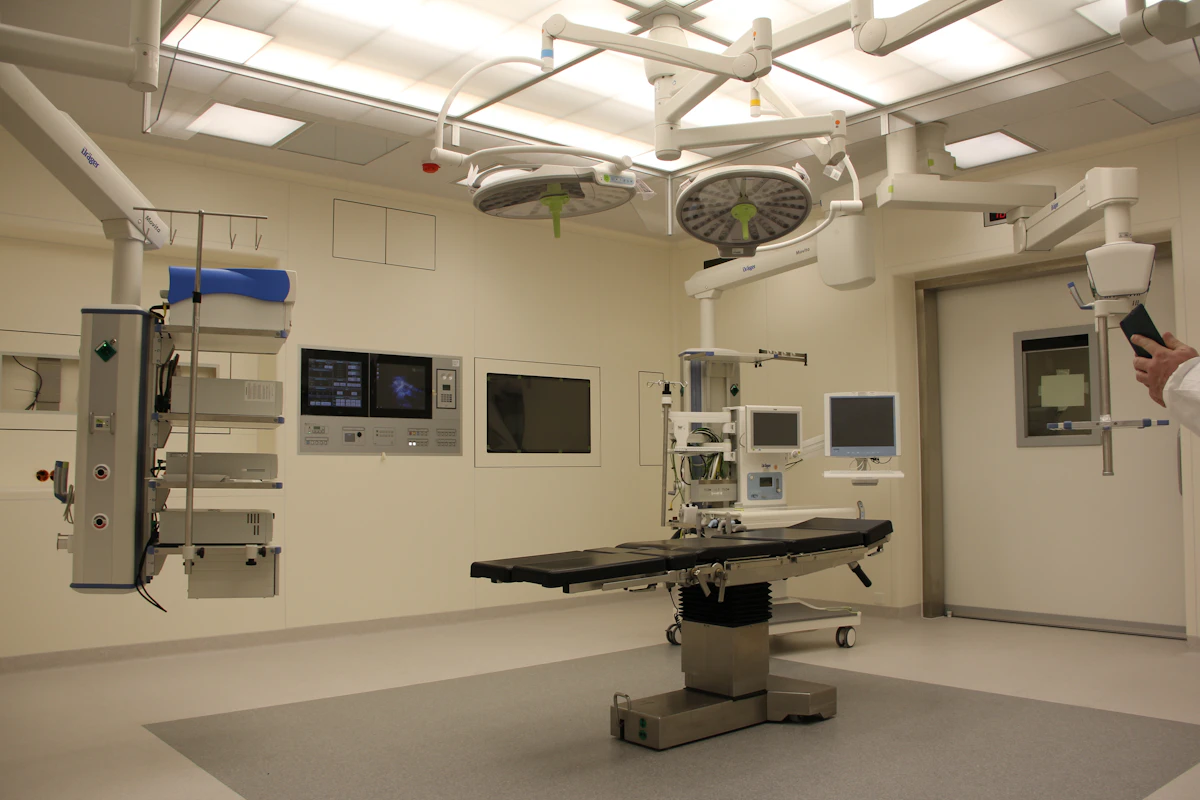
Inside Epic Systems: The Tech Giant Shaping the Future of Medicine
Discover how Epic Systems built a healthcare software empire, leading AI innovations in medicine while maintaining total independence from Wall Street.