Navigating the Future of AI in Enterprise Software Architectures
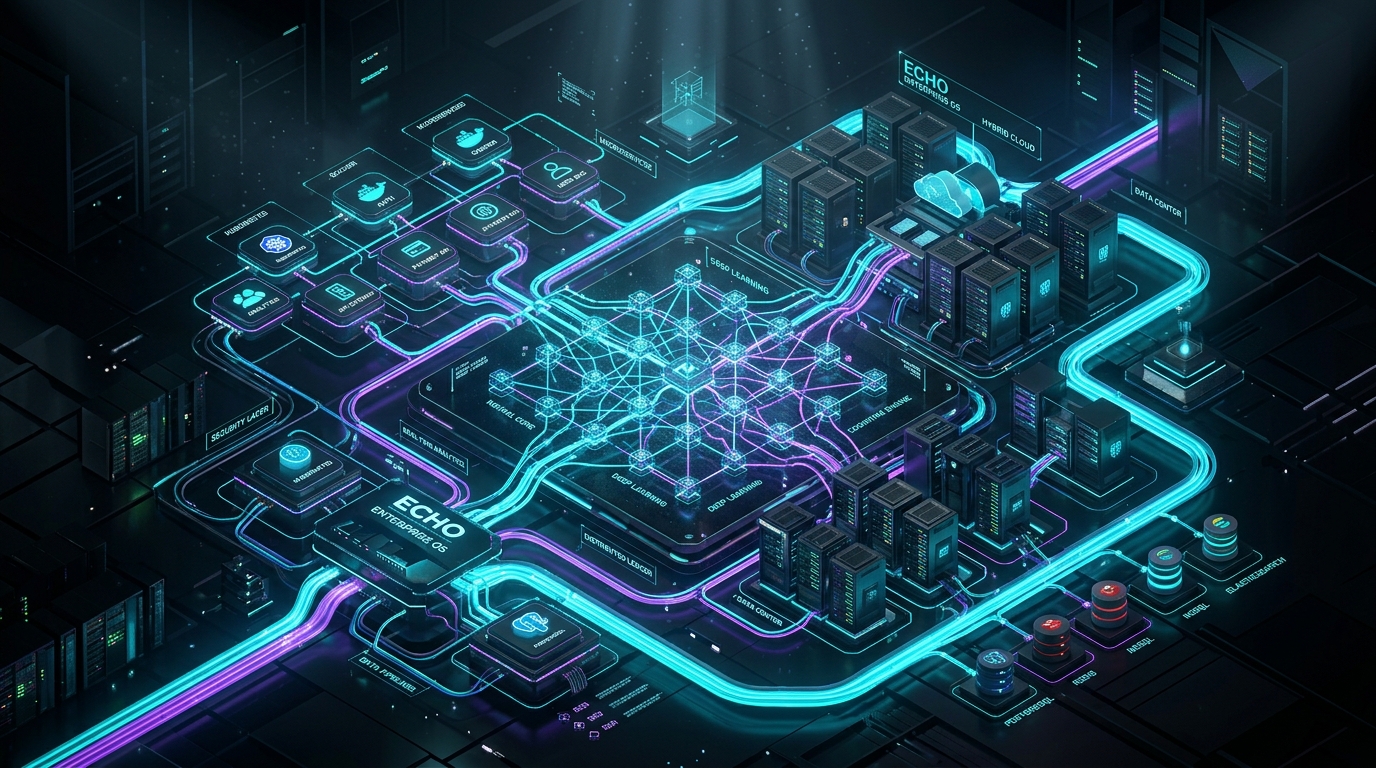
- Vector Databases as Core Infrastructure: Traditional relational databases are poorly suited for similarity searches required by retrieval-augmented generation (RAG) systems. Enterprises are rapidly adopting specialized vector stores.
- Continuous Data Sanitization: Automated pipelines must constantly ingest, clean, and vectorize incoming streams of customer and operational data.
- Edge Computing Integration: Pushing inference closer to the data source minimizes network latency for mission-critical applications.
As digital transformation enters its most sophisticated era yet, the future of ai demands a fundamental re-architecting of how enterprise software systems are designed, deployed, and scaled. Organizations can no longer treat artificial intelligence as a mere bolt-on feature or an isolated API endpoint. Instead, intelligence must be baked into the core data fabric, runtime environments, and decision-making pipelines of modern business operations. This paradigm shift requires CTOs and engineering leaders to rethink their technical stacks, focusing heavily on latency, model governance, cost optimization, and infrastructural resilience.
The Shift Toward Autonomous Infrastructure #
The traditional paradigm of software development relied heavily on deterministic codebases - strict conditional logic where inputs yielded predictable, programmed outputs. However, as we look deeper into the future of ai, deterministic systems are rapidly giving way to probabilistic, agent-driven architectures. Modern enterprise applications are increasingly powered by autonomous AI agents capable of reasoning, planning, and executing complex multi-step workflows without constant human intervention.
This transition shifts the developer's role from writing monolithic business logic to constructing robust orchestration frameworks. Engineers now focus on designing APIs that allow large language models and neural networks to interact securely with legacy databases, cloud storage buckets, and microservice mesh networks. By shifting to agentic workflows, organizations unlock unprecedented levels of operational agility, drastically cutting down the manual overhead traditionally associated with enterprise data processing.
Rethinking the Data Pipeline for Real-Time Intelligence #
Data is the lifeblood of any modern machine learning initiative. Without a clean, highly structured, and low-latency data pipeline, even the most advanced neural architectures will fail to deliver meaningful business value. In the context of the future of ai, companies must transition from batch-processing data architectures to real-time streaming topologies.
- Vector Databases as Core Infrastructure: Traditional relational databases are poorly suited for similarity searches required by retrieval-augmented generation (RAG) systems. Enterprises are rapidly adopting specialized vector stores.
- Continuous Data Sanitization: Automated pipelines must constantly ingest, clean, and vectorize incoming streams of customer and operational data.
- Edge Computing Integration: Pushing inference closer to the data source minimizes network latency for mission-critical applications.
When evaluating how to integrate these components, business leaders should review proven benchmarks like those outlined in this artificial intelligence in business implementation ROI guide to ensure capital is allocated toward high-yield technical infrastructure rather than speculative tooling.
Developer Productivity and the Rise of AI Coding Assistants #
The transformation brought by the future of ai is nowhere more palpable than within the software engineering lifecycle itself. Developers are no longer restricted to traditional integrated development environments (IDEs); they operate alongside sophisticated coding assistants that handle boilerplate generation, vulnerability scanning, and automated refactoring.
Evaluating the current landscape requires understanding how developer tooling directly influences organizational velocity. Engineering teams leveraging solutions compared in the analysis of the best AI coding assistants 2026 cursor vs claude vs github copilot routinely report double-digit percentage gains in daily output. These productivity enhancements do not just speed up feature delivery; they fundamentally lower the barrier to entry for complex system modifications, allowing junior developers to contribute safely to intricate microservices.
Scaling Governance, Security, and Compliance #
With great power comes unprecedented regulatory scrutiny. As enterprises scale their AI deployments, governance ceases to be an afterthought and becomes a primary design constraint. The future of ai requires foolproof observability frameworks that can audit model outputs, detect hallucinations, and prevent data leakage across organizational boundaries.
| Compliance Pillar | Traditional Approach | AI-Native Enterprise Approach |
|---|---|---|
| Data Privacy | Static access control lists | Dynamic, context-aware token masking |
| Model Auditability | Manual code reviews | Continuous automated output logging |
| Security Testing | Periodic penetration tests | Real-time adversarial prompt defense |
Furthermore, aligning these technical governance frameworks with overarching corporate strategy is critical. Organizations that successfully bridge the gap between technical execution and executive oversight are those that understand the principles detailed in architecting enterprise growth strategic impact AI technology. By treating AI governance as an accelerator rather than a bottleneck, companies can innovate rapidly while maintaining strict adherence to international regulatory standards.
Strategic Takeaways for Technology Leaders #
To capitalize on the opportunities presented by the future of ai, engineering and business executives must adopt a proactive, architecture-first mindset. Here are four actionable steps for building a future-proof technical organization:
- Audit Your Current Tech Stack: Identify bottlenecks in your data ingestion and processing pipelines that would hinder real-time AI integration.
- Invest in Developer Enablement: Equip your engineering teams with top-tier AI coding assistants and establish clear guidelines for secure prompt engineering.
- Prioritize Modular Architectures: Design your software systems using decoupled microservices, making it frictionless to swap out underlying model providers as technology evolves.
- Embed Security Early: Implement automated guardrails and vector database security protocols from day one of any new AI project.
Conclusion #
The trajectory of modern software is inextricably linked to the evolution of machine intelligence. The future of ai is not about replacing human ingenuity; it is about amplifying human capability through resilient, scalable, and secure software architectures. Organizations that successfully navigate this transition by modernizing their data pipelines, embracing agentic workflows, and maintaining rigorous governance standards will capture the lion's share of market value in the digital economy.
Related In ai

Demystifying AI Intelligence: How Machine Systems Are Evolving
Explore the rapid evolution of ai intelligence, its core mechanics, and how businesses and developers are harnessing advanced neural networks today.

Architecting Enterprise Growth: The Strategic Impact of AI Technology
Discover how modern enterprises leverage advanced ai technology to optimize operations, scale infrastructure, and drive measurable ROI in digital markets.

The Evolution of AI Development: Strategies for the Modern Tech Era
Discover how modern ai development is transforming industries through advanced coding assistants, autonomous agents, and scalable business implementation workflows.

Artificial Intelligence in Business: Implementation Frameworks, ROI, and Industry Applications
Comprehensive executive roadmap to deploying artificial intelligence in business, covering strategic adoption frameworks, ROI measurement, risk mitigation, and case studies.