Future of Artificial Intelligence: Next-Gen Enterprise Tech

- Semantic Memory Tiers: Short-term conversational context buffers combined with long-term vector embeddings stored across operational databases (such as Pinecone, Milvus, or pgvector).
- Deterministic Sandboxes: Secure, containerized runtimes (e.g., Firecracker microVMs) allowing code-generating agents to execute scripts without compromising network boundaries.
- Multi-Agent Consensus Protocols: Systems that run adversarial agent pairs - such as a developer agent paired against an automated code reviewer - to filter hallucinations before deploying artifacts.
The rapid convergence of foundation models, distributed inference architectures, and automated orchestration platforms is rewriting the blueprint of modern software engineering. We have moved far beyond the initial novelty phase of prompt-driven text generation. Today, the conversation across boardroom tables and engineering standups centers on the architectural and economic realities driving the future of artificial intelligence. For enterprise leaders, this shift requires a fundamental reassessment of technical debt, talent allocation, and infrastructure investment.
To navigate this paradigm, tech organizations must evaluate how autonomous reasoning loops, edge-based deployment models, and compound AI systems will disrupt traditional software-as-a-service (SaaS) paradigms. As we unpack the future of artificial intelligence, understanding the interplay between computational overhead and quantifiable enterprise value will distinguish market pioneers from legacy casualties.
The Architectural Evolution: From Monolithic LLMs to Compound AI Systems #
The earliest enterprise deployments of modern machine learning treated large language models (LLMs) as centralized computational oracles. System architects routed direct calls to single proprietary models, expecting raw scale to solve nuanced domain-specific challenges. This design pattern quickly met its practical limits: excessive latency, unpredictable billing spikes, and catastrophic hallucination rates in mission-critical applications.
The industry is responding by pivoting toward compound AI systems - modular architectures where smaller, specialized models interact alongside vector databases, code interpreters, deterministic state machines, and enterprise data fabrics. Rather than relying on a solitary 2-trillion-parameter black box, engineering teams are decoupling compute.
The Rise of Small Language Models (SLMs) and Distillation #
Specialized architectures, such as fine-tuned 7B and 14B models distilled from larger teacher models, are dominating latency-sensitive workflows. When paired with high-performance inference frameworks like vLLM or TensorRT-LLM, these SLMs achieve near-zero token-processing latency at a fraction of the operational expenditure. Enterprises are learning to route predictable transactional prompts to localized, fine-tuned models while reserving proprietary frontier models strictly for multi-step reasoning challenges.
Organizations exploring practical blueprints for these implementations often analyze our artificial intelligence in business implementation ROI guide to quantify infrastructure trade-offs before provisioning massive cluster workloads.
The Agentic Paradigm: Autonomous Reasoning and Orchestrated Systems #
The single most consequential technical vector shaping the future of artificial intelligence is the leap from conversational chat interfaces to agentic system workflows. An agent is not simply a model answering queries; it is a closed-loop runtime environment capable of decomposing a complex prompt, formulating a plan, validating intermediate state outputs, calling external APIs, and self-correcting upon encountering execution faults.
  User Intent
      │
      ▼
┌───────────────┐      Step 1: Decompose Goals
│ Planner Agent │ ────────────────────────────────┐
└───────┬───────┘                                 │
        │                                         ▼
        ▼                               ┌───────────────────┐
┌───────────────┐     Step 2: Tool Execution   │ API Endpoints &   │
│ Tool Invoker  │ ────────────────────────────► │ Local Environments│
└───────┬───────┘                               └─────────┬─────────┘
        │                                         │
        ▼                                         │
┌───────────────┐     Step 3: Verification & Re-run│
│ Critic Engine │ ◄───────────────────────────────┘
└───────────────┘
This structural evolution is revolutionizing DevOps and internal product engineering. By integrating autonomous AI agents software development pipelines, development velocity increases exponentially. Code review, security vulnerability remediation, synthetic data generation, and integration testing transitions from manual sprint blockers into automated, background-orchestrated loops.
Key architectural pillars required to support robust agentic workflows include:
- Semantic Memory Tiers: Short-term conversational context buffers combined with long-term vector embeddings stored across operational databases (such as Pinecone, Milvus, or pgvector).
- Deterministic Sandboxes: Secure, containerized runtimes (e.g., Firecracker microVMs) allowing code-generating agents to execute scripts without compromising network boundaries.
- Multi-Agent Consensus Protocols: Systems that run adversarial agent pairs - such as a developer agent paired against an automated code reviewer - to filter hallucinations before deploying artifacts.
Infrastructure and Hardware Realities: The Silicon Landscape #
No serious technical forecast regarding the future of artificial intelligence can overlook the hardware layer. Compute scarcity and thermal thresholds represent hard engineering boundaries for modern data centers. While cutting-edge clusters depend heavily on top-tier GPUs, hardware diversity is rapidly proliferating.
| Hardware Class | Typical Architecture | Optimal Workload | Cost/Inference Ratio |
|---|---|---|---|
| General GPUs | Massive parallel FP8/FP16 compute | Frontier training & heavy multimodal processing | High baseline / Variable scaling |
| Custom TPUs / NPUs | Matrix multiplication units (Systolic arrays) | High-throughput cloud inference pipelines | Balanced for sustained long runs |
| Edge Neural Processors | Low-power silicon integrated on-chip | On-device transcription, local routing, UI inference | Minimal ongoing cloud cost |
As on-device neural processing units (NPUs) mature in laptops and mobile hardware, software architectures will increasingly run local-first inference. This structural pivot not only curtails cloud compute budgets but addresses enterprise regulatory requirements around data sovereignty and internal access management.
To learn more about how technological platforms are re-evaluating core operations, explore our coverage of modern Technology architectures and compute design patterns.
Redefining Engineering Productivity and the Modern Tech Stack #
The software development lifecycle is undergoing its most radical transformation since the advent of high-level programming languages and cloud primitives. Synthetic code generation is fundamentally altering the developer velocity equation. Teams leveraging modern coding ecosystems are no longer measuring software cycle times in two-week agile increments.
Engineers routinely leverage tools detailed in our guide to the best AI coding assistants 2026 cursor vs claude vs github copilot to eliminate boilerplate implementation, generate end-to-end integration tests, and migrate legacy codebases in hours rather than quarters. Consequently, the primary responsibility of software developers is transitioning from writing procedural logic to validating systems, setting architectural guardrails, and enforcing rigorous security boundaries.
This shift elevates the strategic importance of technical leadership. Senior architects must now focus on:
- Context Engineering: Curating repository structure and internal documentation so automated engines ingest accurate institutional knowledge.
- Telemetry and Drift Detection: Building telemetry dashboards that measure semantic drift, output degradation, and edge-case execution errors.
- Security Threat Modeling: Preventing vulnerabilities like indirect prompt injection, insecure deserialization from agent outputs, and sensitive proprietary token leakage.
For broader perspectives on organizational design and team efficiency, read our deep-dive analysis on Productivity systems tailored for forward-thinking technology organizations.
Macroeconomic Impact and Strategic Enterprise Roadmaps #
The downstream business ramifications of these technological shifts are vast. In standard enterprise SaaS models, margins traditionally hovered around 70-85%. However, SaaS platforms that hastily wrap generative models without architectural defensive moats are seeing gross margins compressed by token consumption costs and commoditization risks.
To remain competitive, organizations are pursuing systemic integration strategies outlined in our research on architecting enterprise growth strategic impact ai technology. Sustainable competitive advantage no longer stems from merely wrapping external APIs. Instead, it relies on:
- Proprietary Context: Building continuous feedback loops that feed real-world operational domain data back into specialized internal weights.
- Workflow Entrenchment: Designing complex operational systems that embed deeply into mission-critical daily routines where the cost of platform migration is prohibitively high.
- Hybrid Inference Stacks: Intelligently routing dynamic prompts across low-cost, self-hosted open models and premium external APIs to maintain resilient gross margins.
Executives must deliberately construct their technology roadmaps around quantifiable operational efficiencies rather than open-ended exploration initiatives.
Conclusion: Navigating the Next Horizon #
The future of artificial intelligence will not be defined by mere parameter size or isolated benchmarks. It will be carved by the pragmatic execution of distributed inference, deterministic agentic engineering, resilient data pipelines, and strict cost-to-value economics. As the technology evolves from novelty chatbots into mission-critical operational fabric, architects, developers, and technology executives must actively construct infrastructure that transforms theoretical machine intelligence into durable, scalable enterprise impact.
To keep pace with emergent frameworks, model evaluations, and high-impact industry shifts, explore our comprehensive repository of resources under BunusRadar's Artificial Intelligence editorial channel.
Related In ai

Scaling Operations: The Strategic Evolution of AI in Business
Discover how modern organizations leverage ai in business to optimize operations, drive strategic growth, and architect scalable enterprise software systems.
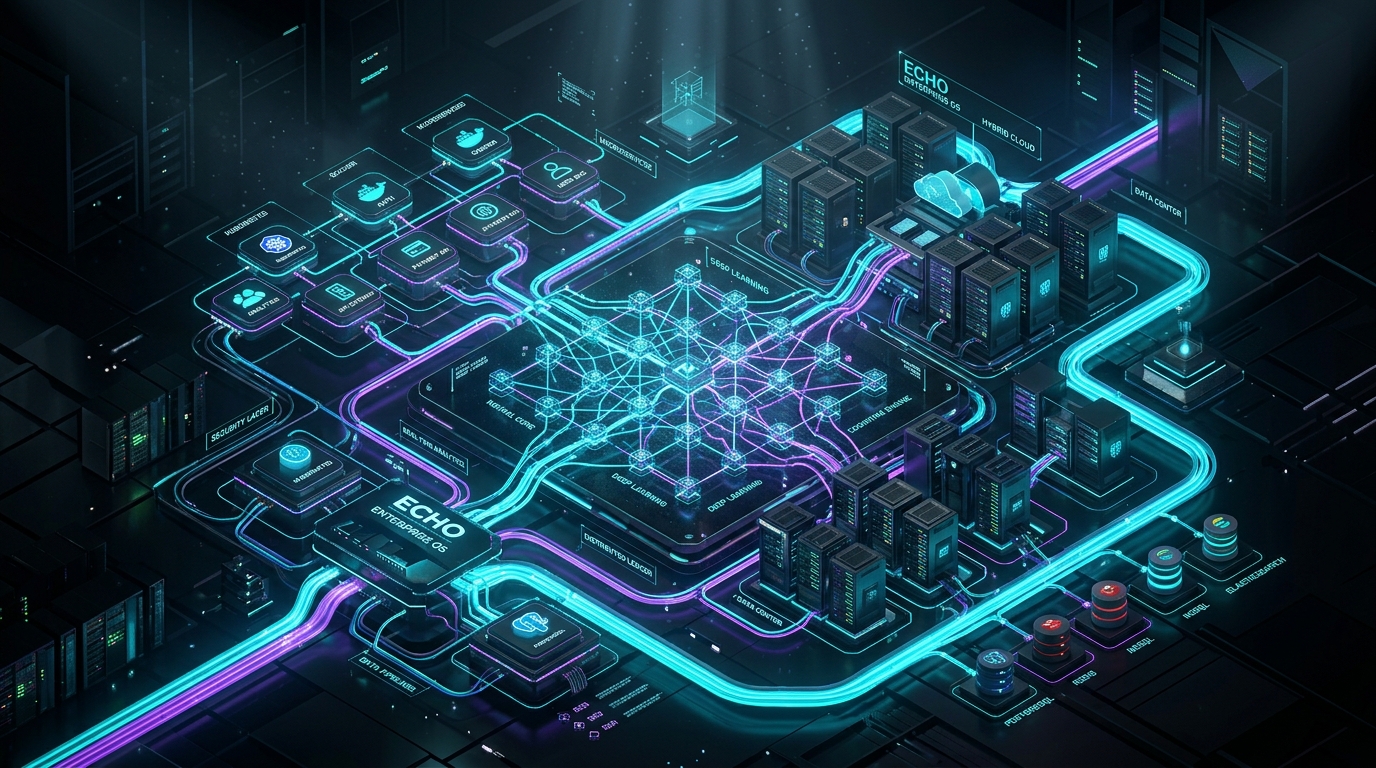
Navigating the Future of AI in Enterprise Software Architectures
Explore how the future of ai is reshaping enterprise software architectures, driving automated workflows, and redefining ROI for modern digital businesses.

Demystifying AI Intelligence: How Machine Systems Are Evolving
Explore the rapid evolution of ai intelligence, its core mechanics, and how businesses and developers are harnessing advanced neural networks today.

Architecting Enterprise Growth: The Strategic Impact of AI Technology
Discover how modern enterprises leverage advanced ai technology to optimize operations, scale infrastructure, and drive measurable ROI in digital markets.